
3 Myths About Cohousing — Cohousing Corner, May 2026
3 Myths About Cohousing
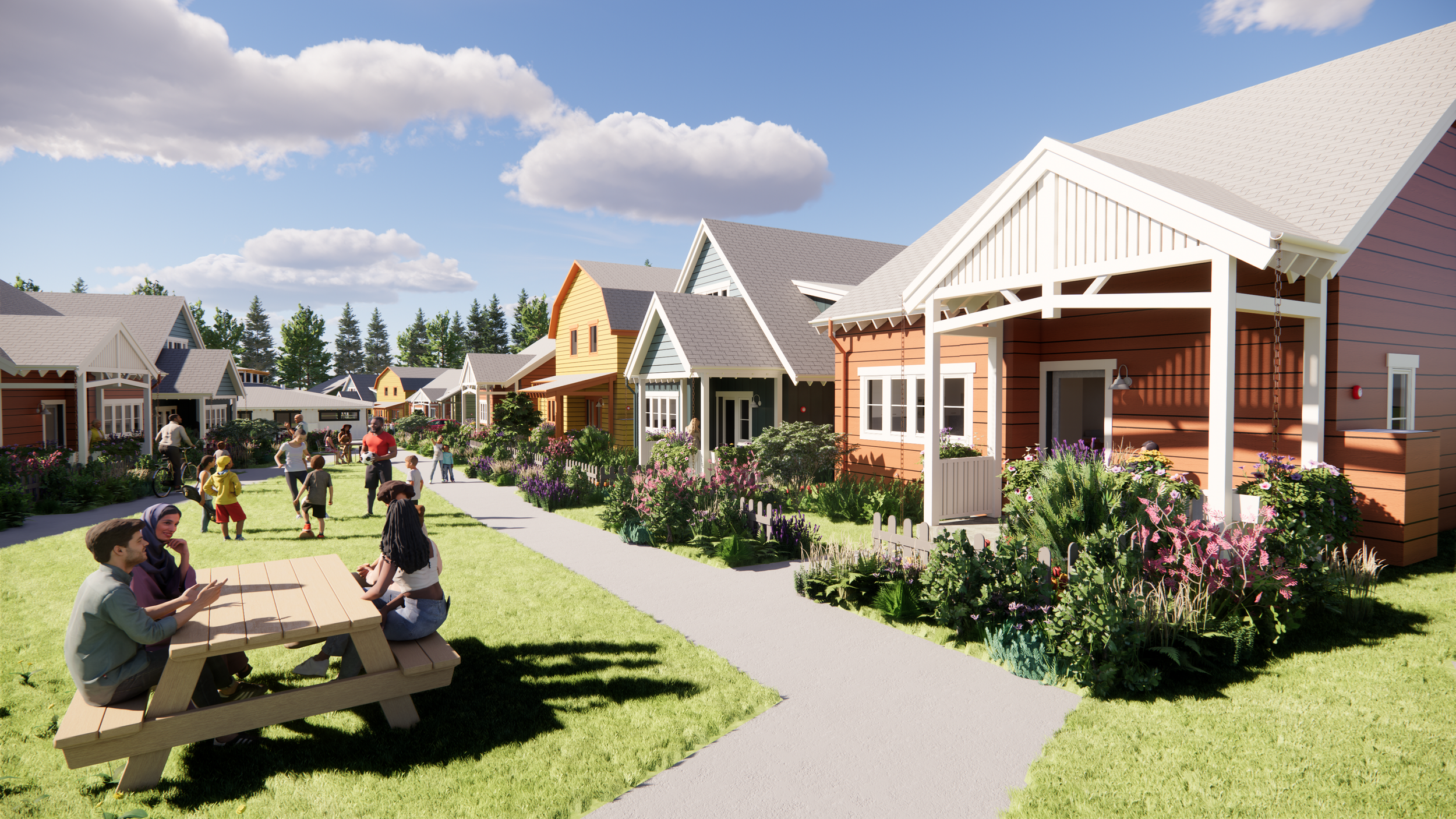
Intentional communities come in many forms, each with its own approach to governance, ownership, lifestyle, and values. With so many variations, it's easy to mix them up, and cohousing often gets lumped in with models that look very different in practice. Add in a few common myths, and it's no wonder people have questions. Today, we're tackling 3 common misconceptions about cohousing and sharing what life at Sunnyside Village will actually look like.
1. Cohousing is the Same as Living in a Commune
This might be the most common misconception about cohousing, and it's an important one to clear up.
In a commune, most or all resources are shared collectively. That typically means total shared ownership of property, pooled income, and communal decision-making over how finances and daily life are managed. Individual ownership is minimal, and the group's needs generally come before personal autonomy.
Cohousing is fundamentally different: while there is shared ownership of common spaces like the Common House, every person or family owns their private home outright. You manage your own finances, make your own lifestyle choices, and have complete autonomy over your personal life. There's no pooled income and no group ownership of private homes.
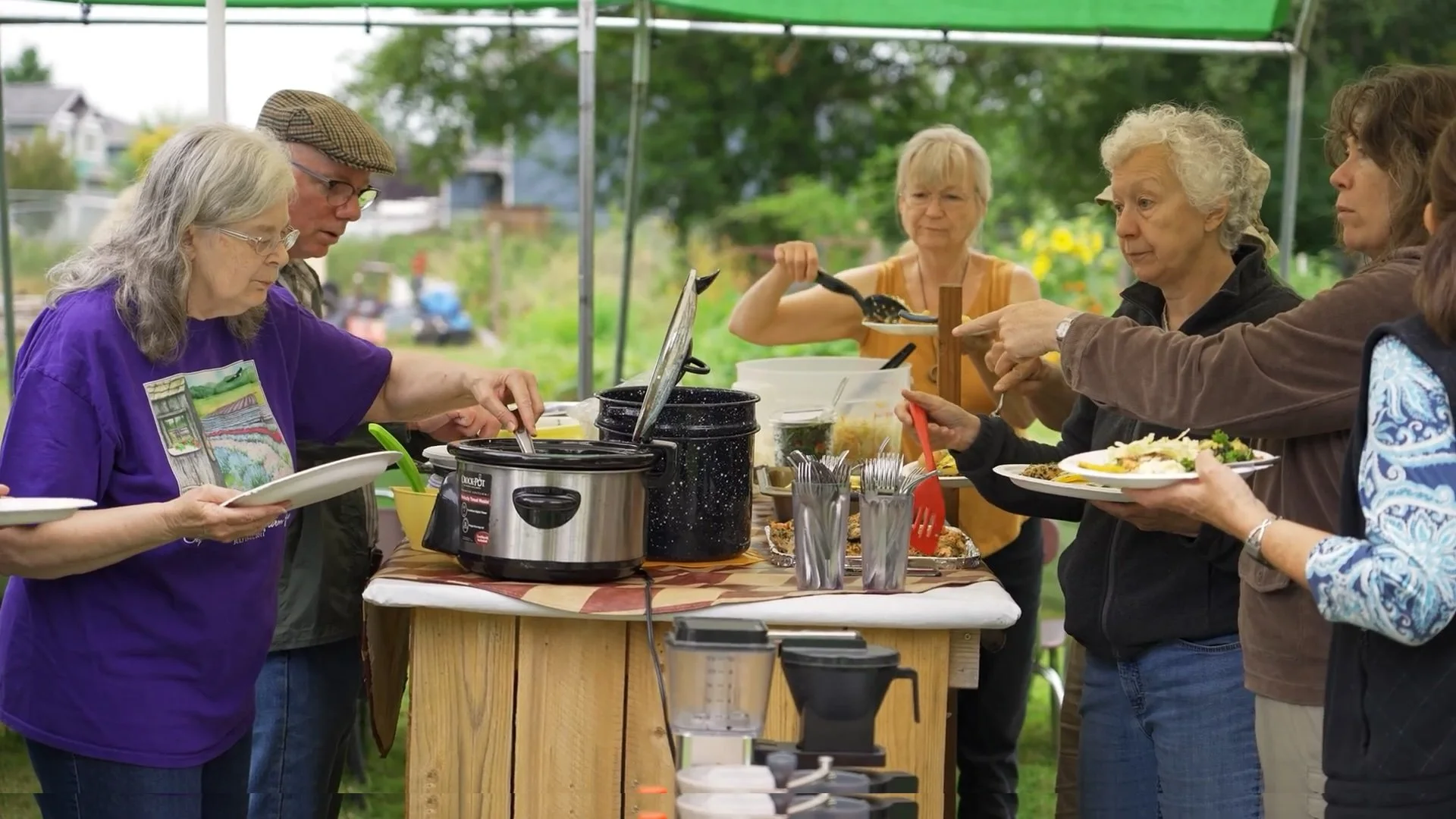
What is shared are the spaces and experiences that make life richer: a Common House for meals and gatherings, a community garden, a workshop, and the everyday moments of connection that come from living among people who genuinely know and care about each other.
Think of it this way: a commune asks you to merge your life with the group. Cohousing invites you to keep your independence while choosing to live alongside others in a more connected, intentional way.
2. Cohousing is the Same as a Regular Neighborhood with a Homeowner's Association
Not quite. While cohousing does include a homeowner's association for shared property, that's where the similarities end.
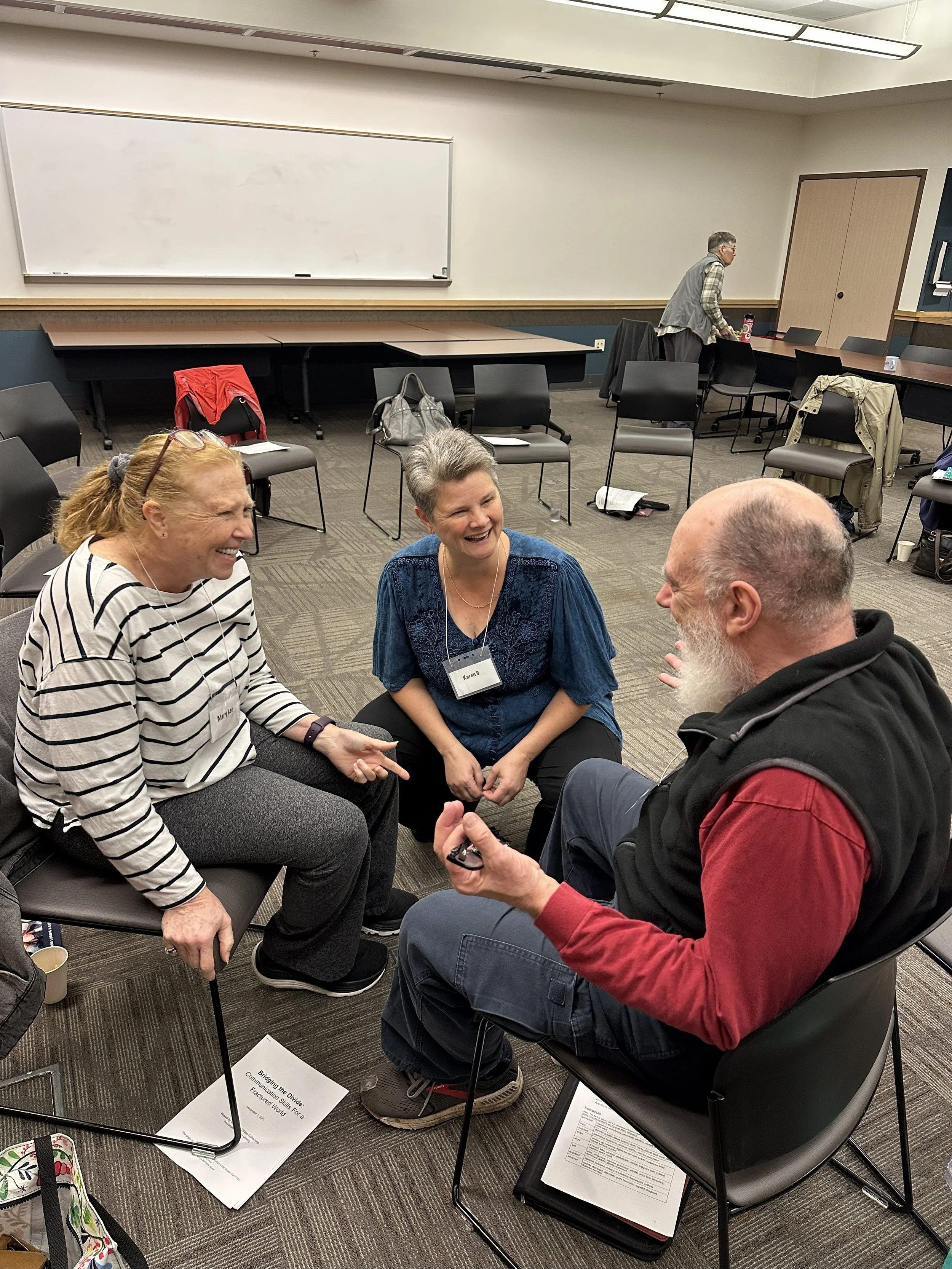
SVC Members at our Building Bridges workshop
In a cohousing community like Sunnyside Village, each person owns their private home, but, as mentioned above, the community also co-owns shared spaces like the Common House. And unlike a traditional HOA, every member has a voice in decisions, which are made using Sociocracy, a consent-based governance model built (learn more about Sociocracy HERE).
But the real difference goes deeper than governance. Cohousing is truly a lifestyle. It's neighbors gathering for regular shared meals in a communal kitchen and dining room. It's tending the garden together, hosting movie nights, playing games with people of all ages, or winding down with an impromptu glass of wine and good conversation. It's sharing tools and resources so your private home stays uncluttered, and knowing that the people around you genuinely care about each other.
A traditional HOA manages property. Cohousing builds relationships.
3. When You Live in Cohousing, You Don't Get Any Privacy
This is one of the most common concerns we hear, and it makes sense. When people learn that cohousing is centered around building relationships with neighbors, the first thought is sometimes "that sounds like a lot of social time."
But cohousing is designed with balance in mind. Your home is fully private, with everything you need. How much time you spend with others is entirely up to you. Some days that might mean joining a group meal or a walk with neighbors. Other days it might mean a quiet wave from your porch and an evening to yourself. There's no obligation to show up to every event or activity.

For introverts especially, cohousing can actually be a great fit. Connection doesn't have to mean constant socializing. It can be a one-on-one coffee with a neighbor, a shared moment in the garden, or simply knowing that people nearby genuinely care about you.
That's really the heart of it. Cohousing isn't about being social all the time. It's about living among people who truly know each other and can rely on one another for support, for a laugh, or for whatever life brings.
At the end of the day, cohousing is something you really have to experience to fully understand. It's not a commune, it's not a traditional HOA neighborhood, and it's not a place where you give up your personal space. It's something in between, and we think something better: a community where you own your home, live your life on your terms, and have genuine connection right outside your door.